

The Uncomfortable Question
Are you actually working hard?

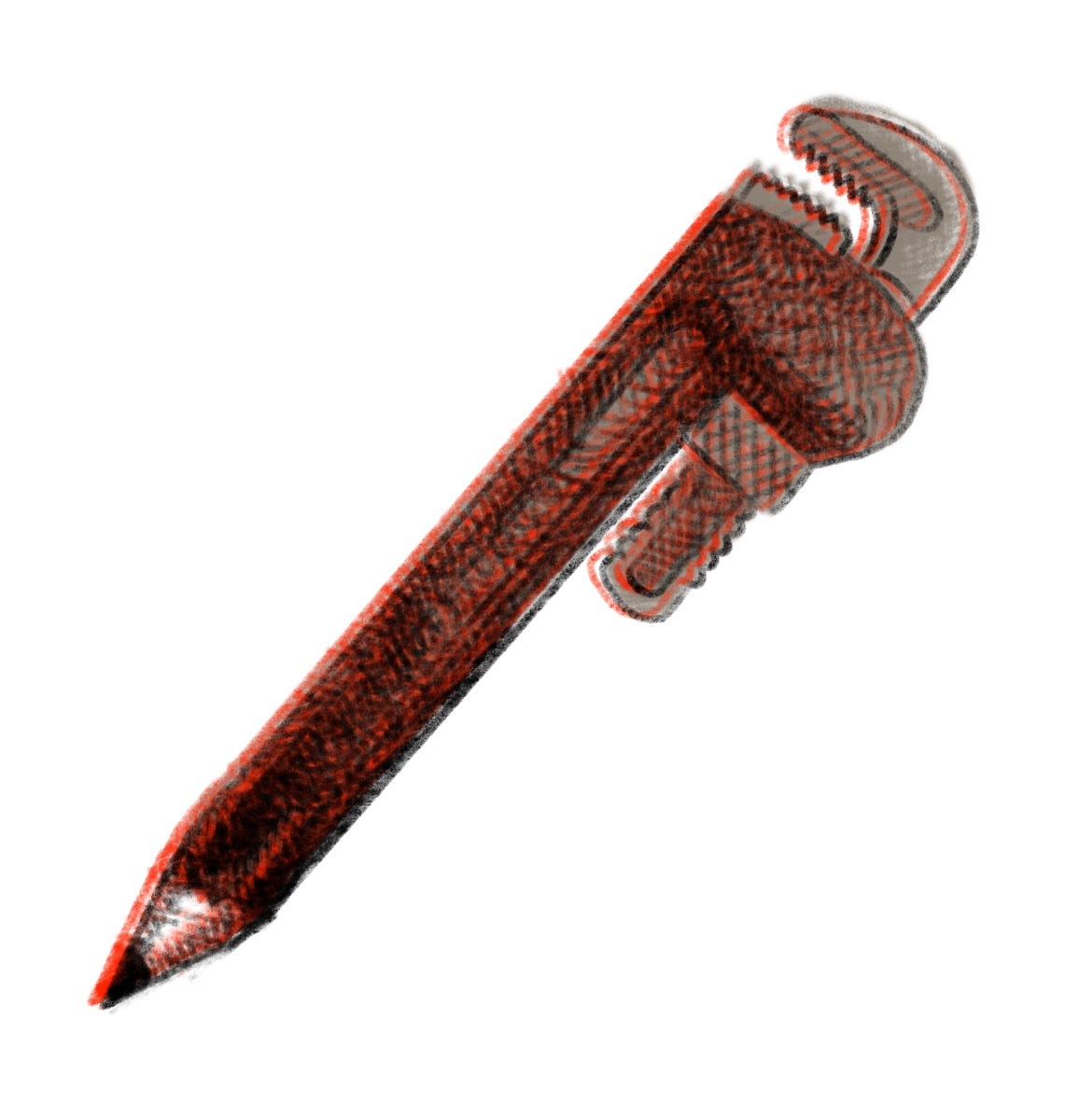
A few colleagues and I have been having the same conversation lately. We’re worried about our students. Not because they’re not talented—many of them are. Not because they don’t care—most of them do. But because they’re not working hard enough.
It’s an uncomfortable thing to say out loud. “Work harder” sounds dismissive, even cruel. We worry about coming across as the grumpy old guard, the “back in my day” crowd. We genuinely want our students to succeed. That’s why we’re having this conversation in the first place. But the concern remains: many of them simply aren’t putting in the work.
Recently, I watched a seasoned art director on TikTok say something that crystallized what we’d been dancing around: “Some artists think they’re working hard, but they’re actually not.”
She was right. And it’s not just students. It’s a lot of us.
Let me be clear about what doesn’t count as working hard, even though it might feel like it does:
Sending a few emails to art directors isn’t working hard. It’s the minimum. It’s checking a box. Real outreach means researching who actually needs your kind of work, tailoring your approach, following up, building relationships over time. It means hearing “no” fifty times and sending email fifty-one.
Doing the minimum on your work isn’t working hard. Getting the assignment done, hitting the technical requirements, turning something in on time—that’s baseline. That’s showing up. Working hard means pushing past the first acceptable solution to find the better one. It means making it three times and throwing away the first two versions because they weren’t good enough yet.
Pulling all-nighters isn’t working hard. It might be working desperately, or working inefficiently, or working at the last minute. But exhaustion isn’t the same as effort. If you’re regularly staying up all night, you’re not working hard—you’re working poorly. Hard work is sustainable, consistent, and strategic.
Real work in this field looks different than we were taught in school. School taught us that effort equals hours spent, that showing up and trying means you should succeed. But creative work doesn’t follow that formula.
Working hard means making a lot of bad work. Not a few pieces. A lot. Hundreds of drawings, dozens of failed compositions, countless color studies that don’t work. You can’t think your way to being good—you have to make your way there. Most people stop after ten attempts and wonder why they’re not improving. The people who get good make a hundred attempts and consider it a warm-up.
Working hard means revision. Not tweaking. Not adjusting the color balance on something that’s fundamentally not working. Real revision means being willing to throw away work you spent hours on because you can see now that it’s not good enough. It means starting over. Multiple times. Most people can’t bear to kill their darlings, so they end up with work that’s almost good but not quite.
Working hard means showing up consistently, not just when you feel inspired. The romantic myth of the artist waiting for the muse is seductive and completely useless. Professionals work on Tuesdays at 2pm when they’re tired and uninspired. They work when it’s hard. When it’s boring. When they’d rather be doing literally anything else. Stephen King has a lot of say about this in his book On Writing. Worth the read.
Working hard means seeking real feedback and actually using it. Not collecting compliments from friends. Not posting on Instagram and counting likes. Real feedback means showing your work to people who will tell you the truth, and then—this is the hard part—actually applying what they tell you. Changing your approach. Trying something different. Most people ask for feedback and then defend their choices. That’s not working hard, that’s performing the appearance of openness.
Working hard means studying. Not just looking at work you admire, but studying it. Taking it apart. Understanding how it was made, what choices were made, what’s making it work. Copying it to understand it. Analyzing it until you can articulate why it’s effective. Most people look at great work and think “I wish I could do that” and then move on. Working hard means looking at great work and asking “How did they do that?” and then spending hours figuring it out. I consistently set off alarms in museums as I get so close to some paintings trying to figure out what the artist did.
Here’s what I’ve learned, both from my own work and from watching hundreds of students: most people overestimate how hard they’re working.
And I include myself in this. I fall into this trap constantly. I convince myself I’ve earned a break when I’ve barely started. I rationalize that I’m “thinking through problems” when I’m really just avoiding the work. I tell myself I’m working hard when I’m really just working adjacent to hard—doing the easy parts, the comfortable parts, the parts that feel productive without actually being productive. And, hey, I need that reward break, right?
We confuse busy with productive. We confuse time spent with effort invested. We confuse good intentions with actual execution. “I tried” doesn’t mean you tried enough different approaches. “I worked on this for hours” doesn’t mean those hours were spent well.
I see students who say they want to be professional illustrators but who haven’t made a new piece for the portfolio work in six months. Who send their work to three places and then complain the industry is impossible to break into. Who do exactly what’s required for class and nothing more, and then wonder why their work isn’t competitive.
The gap between wanting something and working for it is vast. Most people live in that gap and don’t realize it. I live there more often than I’d like to admit.
This isn’t about being mean. It’s not about gatekeeping or making things harder than they need to be. It’s about respecting your own potential enough to meet it halfway.
If you want to be good at this—really good, professionally good, make-a-living-from-it good—you have to work harder than you think you do. Not harder than everyone else (though that might be true too), but harder than you currently are.
The good news? You probably already know where you’re cutting corners. You know which parts of the process you rush through. You know when you’re settling for good enough instead of pushing for actually good. You know the difference between working and appearing to work.
So here’s what you can do:
Make more. Not just more finished pieces, but more attempts, more studies, more experiments. Quantity creates quality. Not eventually—directly. The hundredth drawing teaches you things the tenth drawing can’t.
Finish things properly. Not just to the point where it’s acceptable or good enough to turn in, but finished. Really finished. Polished. Most students stop at 80% and call it done because finishing is hard and uncomfortable. They abandon work before it’s actually reached a state of completion. I constantly watch students abandon work just after they start because they are afraid to push through until the end. They often work to “get it done” rather than to make good work. Learning to focus through that last 20%—the hardest, most tedious part—is a crucial skill. Finishing is its own discipline. Lots of starts are great, but so are lots of finishes.
Seek harder problems. If you’re comfortable, you’re not growing. Work on projects that scare you a little. Use materials you’re not good with yet. Try compositions that feel too complex. The discomfort is the work.
Get real feedback and use it. Find people whose opinions you trust and who will tell you the truth. Then listen to them. Then change your work based on what they said. Then show them again. Repeat.
Be honest with yourself. Track your hours if you need to. Not the hours you spent “working on your career” (browsing Instagram, sending one email, thinking about projects), but the hours you spent actually making things. The number might surprise you.
There will come a time—maybe it’s already here—when you’ll be forced to make a decision: either work hard at this, or quit.
I’m reminded of those trying out for the Navy SEALs during BUD/S training. There’s a bell they can ring at any time. Ring it, and the suffering stops. You’re relieved. You can move on. No one forces you to stay. But the people who make it through aren’t necessarily the strongest or the most talented. They’re told, over and over, that it’s a mental game. It’s about grit. About choosing not to ring the bell, even when every part of you wants to.
There will be moments when you want to ring the bell. When you’re tired of rejection, tired of revision, tired of not being where you thought you’d be by now. When the gap between your taste and your ability feels unbearable. When staying up for one more round of sketches feels impossible.
You can ring the bell anytime. You can decide this is too hard, too uncertain, too much. That’s okay.
Realizing you don’t actually want to work this hard at art—that you love making things but don’t want to do the work of making it a career—is not failure. It’s clarity. It’s honest self-knowledge. Art can be a rich, fulfilling part of your life without being your profession. There’s no shame in that. In fact, there’s freedom in it.
But if you want this as a career, you can’t ring the bell and still expect to make it through. Talent won’t carry you. Only hard work will. Resilience. Showing up when it’s hard. Choosing not to quit when quitting would be easier.
I worry about our students because we’ve been where they are. We’ve made these mistakes. We’ve confused effort with effectiveness. We’ve settled for good enough when we could have pushed for better. We’ve wondered why we weren’t getting opportunities while simultaneously not doing the work that would earn those opportunities.
And honestly? I still make these mistakes. I still have weeks where I coast. Where I’m delusional about my efforts. Where I deserve the criticism I’m handing out here. I’m writing this as much to myself as to anyone else. This isn’t coming from someone who has it all figured out—it’s coming from someone who keeps having to relearn the same lessons about what real work looks like.
I’m not trying to discourage you. I’m trying to tell you the truth that it took me too long to learn: talent is real, but it’s also often just disguised hours of practice. The people whose work you admire worked harder than you think they did. They made more bad work than you’ve made total work. They revised more times than you’ve tried once. They showed up more consistently than you’ve shown up at all.
This isn’t about working yourself to exhaustion. It’s about working with intention, consistency, and honesty. It’s about closing the gap between wanting and doing. And it’s about being honest with yourself about whether you actually want to close that gap.
The view from there—from having put in the work—is worth it. But you can’t think your way there. You can’t wish your way there.
You have to work your way there.
So: are you actually working hard? Or are you working hard at appearing to work hard? And if you’re not working hard—do you actually want to?
Only you know the answer. And only you can close that gap. Or decide not to, and find peace in that choice too.
So good. Bitter medicine, but worth it. 💪
I think we as a culture almost fetishize "working hard" and it clouds our ability to understand what that really means. I am reminded of one of my favorite quotes. Painter Chuck Close said, "Inspiration is for amateurs." Art isn't magic, it's as much about showing up and working as any other job. Like you say here, if you aren't working at the fringe or your abilities, you aren't growing.
I'd encourage you, and anyone, to look up Brian Canini's talk from CXC a couple years ago about productivity. The guy has kids and works a full time job. He also draws better than a full graphic novel's worth of comics a year. He talks candidly about his struggles with perfectionism.
This was a fantastic read. Thank you for putting the time into this.