

Look Again
How Breaks and Reframing Can Transform Your Work

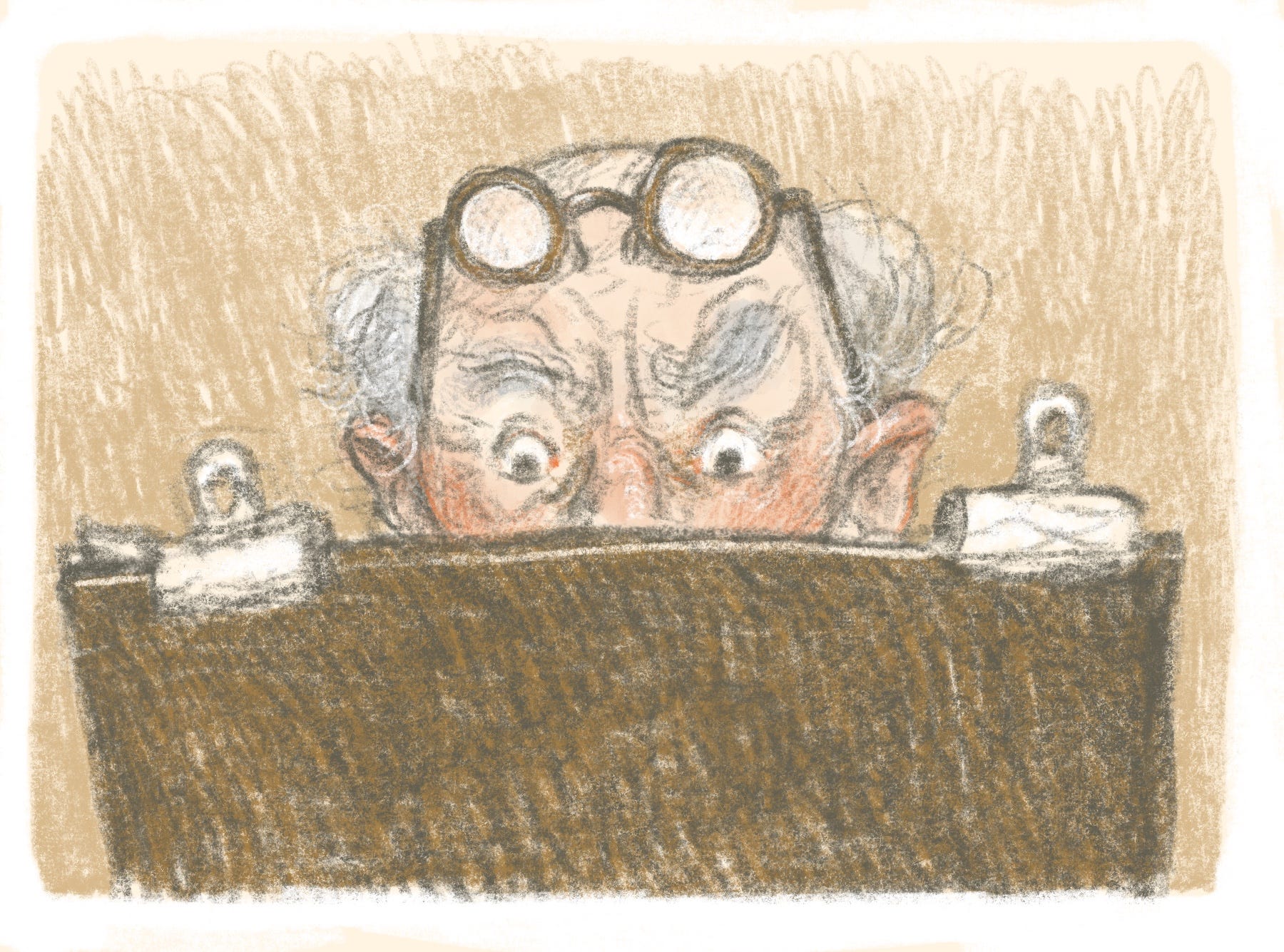
You’re in a figure drawing class. The model has been posed for twenty minutes, a challenging pose. You’ve been locked in with your study and drawing. The timer rings. The model grabs her robe, steps down from the stand, and heads for the door.
You stand up. You stretch. You sharpen your pencil, grab a drink, chat with the person next to you. Ten minutes later, the model is back on the stand, robe dropped, same pose.
You sit down and something has shifted.
Parts of your drawing, ones that have taken considerable time, well, they are wrong. Angles are off. The proportions that looked convincing when the break started now seem obviously mistaken. Your effort, once pleasing, now looks unresolved. How did you miss that?
You didn’t miss it. You just needed to stop looking at it.
We celebrate unbroken focus. Grinding through, staying locked in, not stopping until it’s done — these feel like virtues. And sometimes they are. But in perceptual work, drawing, painting, writing, designing, sustained attention can work against you.
When you stare at something long enough, you stop seeing it. Your brain begins to accept what you have drawn without critical judgement. It will miss what’s actually there and substitute it with what you hope is there. Those two things can drift surprisingly far apart without you noticing.
Breaks are the corrective. They are not a concession to weakness or distraction. They are a legitimate tool, one of the most powerful ones in your kit.
Here are three ways to use them.
1. The Timed Break
The figure drawing class has the right idea, and not by accident. The structure, roughly twenty minutes of work followed by a five to ten minute pause, has a kind of biological logic to it. Your hand rests. Your eyes reset. And crucially, your subconscious keeps working even when your pencil is down.
Stepping away from a problem doesn’t mean abandoning it. The mind continues to process, evaluate, and quietly resolve things beneath the surface. You’ve probably experienced this: the solution to something that was stuck comes to you in the shower, or on a walk, or right as you’re falling asleep. It’s not magic, rather, what your brain does when you stop forcing it.
You can apply this to your studio practice with a simple timer. Work with full attention for twenty minutes (or whatever works for you), then genuinely stop. Put the tool down, get up, move around. Don’t hover over the piece. Don’t keep glancing at it. Come back with fresh eyes.
At some point, stopping for the night is the right call too. No amount of pushing through exhaustion substitutes for returning to your work the next morning and seeing it clearly. Excellence isn’t ground out in a single sitting. It accumulates across many sessions, each one informed by a little distance from the last. I remember vividly noticing that my ability to make and judge good work takes a nose dive after midnight.
2. The Physical Reframe
The second method doesn’t require time, just a change in perspective. Literally.
Turn your drawing upside down. Step back to at least 3 feet or until you’re across the room. Hold a small mirror up and look at your work in reverse. Many of us automatically do this, leaning back, squinting our eyes. These strategies aren’t quirks but ways of disrupting the visual assumptions your brain has built up.
When you spend time on a piece, your eye starts to autocorrect. It knows what you intended, so it reads the work generously, smoothing over the angles that are slightly off, accepting the proportions that don’t quite hold. Flipping the image, reversing it, or viewing it from a distance breaks that pattern. Suddenly you’re seeing what’s actually on the page, not what you meant to put there.
In my early foundations drawing classes, I had students add a small compact mirror to their drawing kit. It costs next to nothing and takes up almost no space. The transformation in how students saw their own errors and fixed them was often very helpful.
If you work perceptually, meaning you draw what you observe rather than what you imagine, this kind of visual reorientation is especially powerful. Problems in proportion, angle, and shape that were invisible from your working position become obvious the moment you shift your vantage point.
3. The Long Rest
Sometimes the most productive thing you can do with a piece is turn it to face the wall.
It’s not a dramatic gesture of frustration, though that’s allowed, but as a deliberate choice to let some time do the work. When a piece is genuinely unresolved, or when you’ve lost the thread of what you were trying to do, distance measured in days rather than minutes can be useful.
Take the work off the easel or drawing board and turn it around. Put it somewhere it won’t catch your eye every time you walk past. Then go live your life for a day, or two, or a week.
What happens next is hard to explain but easy to recognize once you’ve experienced it. The piece stays with you even when you’re not looking at it. Your subconscious continues to turn it over, testing solutions, questioning choices, working through what felt stuck. When you finally bring it back out and face it again, you often find that what seemed impossible to resolve has become clear.
A word of caution: this technique belongs to projects with generous timelines. It requires that you’ve started early enough to afford the pause. If a deadline is looming, stepping away for a week is a luxury you may not have. But if you’re working on something long-form, a series, a personal project, something with a distant due date, building in extended rest periods isn’t procrastination it’s process.
Each of these three methods, the timed break, the physical reframe, and the long rest, is doing a version of the same thing: interrupting the relationship between you and your work so you can see it more honestly.
Familiarity is the enemy of clear seeing.1 The longer you look at something in the same way, from the same position, in the same state of mind, the more your perception hardens into assumption. Breaks and reframing strategies are how you stay a skeptical observer of your own work rather than a defender of it.
The figure drawing class makes this structural. The timer removes the choice — you have to stop, whether you want to or not. Most of us, working alone in a studio or at a desk, don’t have that external forcing function. So we have to build it ourselves.
So build it. Set the timer. Get a mirror. Give yourself permission to turn a piece to the wall and walk away. Your not weak, it’s part of the process.
A Question for You
Have you found other ways to step back and see your work fresh? A particular ritual, a different kind of reframe, something that works for you that I haven’t mentioned here? I’d love to hear about it in the comments.
Alright, breaks over. Now, back to the drawing desk.
This is why you study with teacher btw. They are great at pointing out your mistakes and will help you reframe the vision of your work.
When drawing digitally sometimes even the simple act of exporting the image out of photoshop and viewing it on my monitor instead of on my cintiq shifts my perspective from "the artist" to "the viewer"
I don’t have a mirror, but I use my phone camera (and encourage my students to use theirs.) It really helps me to look at my paintings in a thumbnail size—it forces me to stop obsessing over small areas of a painting and get back to seeing what is happening to the piece as a whole. Phone photos also allow me to flip it upside down and backwards to make sure I’m not missing something really off. I’m with you 100%—the longer I work at this, the more I realize how valuable my time away is; what sometimes feels like frustrating disruptions to my work day often end up being a real benefit when I return to a project.