

You Will Get Better
Alright, bring it in.

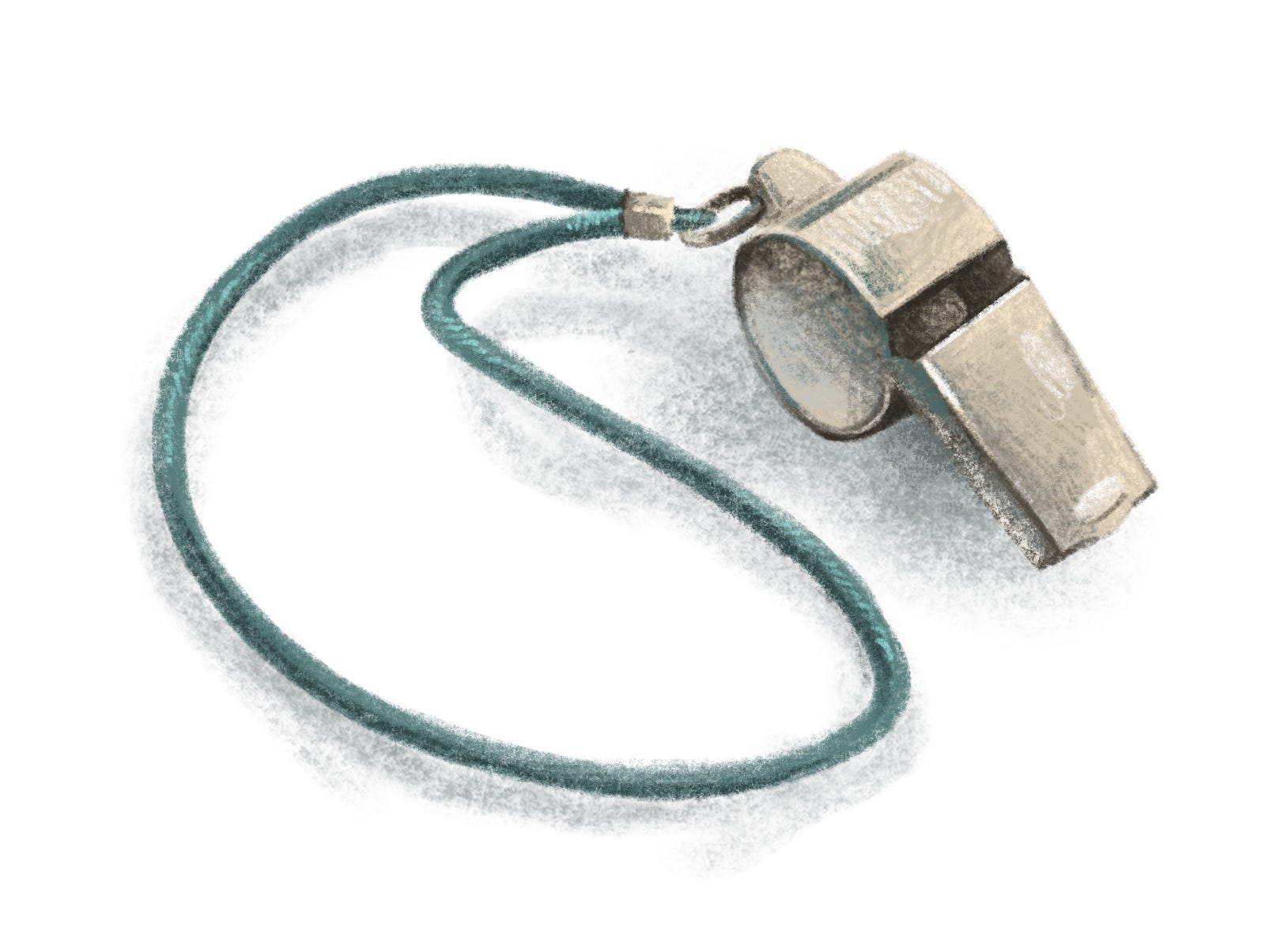
I tell my students that I am not their teacher or professor. I am their art coach. Maybe I should start wearing a whistle.
I had a coach once. After two years of a substandard experience in track and field as a high schooler, I attended a summer track intensive. At this camp, there was a coach assigned to my specific event, high jump. I hadn’t had this since junior high and was eager to work with him. We placed the mats and crossbar, did some warm-ups, and got to work. He asked me to take a few jumps while he watched and took notes. After about five minutes he called me over, and we started working on my form and technique. I was a tall, lanky kid, and at the time my personal best was leaping over a bar set at 5’11” (about 1.8 meters).
“Chris, you are running a little too slow in the approach, so your momentum isn’t carrying you over the bar fast enough,” he said. So I started to run a little faster. “Chris, you need to drive your arms a little harder, and you should start that earlier in your jump.” “Chris, watch that you don’t stutter step.” “Chris, throw your head back harder and kick your legs forward a little more.” And on and on.
The result was pretty incredible. In one practice session, with a coach standing by, I increased my personal best to 6’4”. A five-inch increase — in one day! This meant that I could jump over my own height. It was so satisfying to see that I could improve, especially after three years of languishing in high school track limbo. I got better!
Another quick story.
I was a student at ArtCenter College of Design in the mid-1990s. I took a figure drawing class from a guy named Vern Wilson, who had us keep a sketchbook dedicated to figure drawing. It was an intense assignment. By the end of the semester, you were required to display 500 drawings — some from life, others as master copies. All pages would be cut from your sketchbook and taped end to end to create a long scroll, which would be rolled down the long hallway outside class. There Vern would grade. (One student asked if he actually counted all 500, to which he said he didn’t need to — he could tell just by looking at your scroll if you had done the work.)
This meant that every day I needed to complete seven or so drawings to not fall behind. I was scribbling away in my sketchbook all the time that semester. During lunch, at home, at Tuesday figure study lab, and in the hallways waiting for my appointments with faculty. Oh, did I mention this was all to be done in ballpoint pen? The Staedtler Stic 430 F — I still remember the brand. This meant you could not hide behind your eraser. Every mark I made counted, so I was more dialed in than usual.
At some point during the semester, maybe around week eight, I suddenly saw and could draw a human hand with confidence. I could see the structure, the silhouette of the shapes, the negative space — all of it. And I was able to lay down, in that media, with confidence, a good drawing. All that work had started to pay off. I got better!
You will get better too. It might happen suddenly, or it might take a year or more. Your ratio of success and failure will swing from more bad stuff to more good stuff. You will gain confidence in your abilities and be able to take on more challenging work. Your output will start to match your ideas. The kicker is that you have to put in the work. Watching others do it, reading about it, going to see it — none of that is enough. Your hand, along with a pencil, pen, or brush, has to log the hours and days, weeks and months. But you will get better. Don’t be discouraged. Carry on with determination.
Now go get showered.
Now I’m inspired to get a sketchbook and dedicate myself to drawing 7 figures a day - or at least get close! What an amazing challenge. Thank you for your encouraging words!
When I'm working with students, I will also often use a sports (or music/performance) analogy — I think they're so often expecting themselves to be good at drawing right away and they get frustrated easily. When I equate it to sports or other practice in the performing arts, they start to get it.... it doesn't make the work any easier, but I think it helps to shift their perspective on the rate of skill growth!